Buying Japan Property From Singapore in 2027: Tokyo, Osaka, Taxes, Yield & Risks
Japan property can look cheap from Singapore. We compare Tokyo, Osaka, yields, taxes, FX risk, financing and the akiya trap.

Japan property can look cheap from Singapore. We compare Tokyo, Osaka, yields, taxes, FX risk, financing and the akiya trap.
.png)
Japan property is having a moment.
Singapore buyers are being drawn by a weak yen, relatively affordable entry prices, strong tourism, and rental yields that can look attractive beside Singapore. But the market has changed quickly. Institutional investment is hitting records, interest rates are rising, Tokyo prices have climbed sharply, and Japan is starting to scrutinise foreign ownership more closely.
So the real question is not whether Singaporeans can buy property in Japan. It is whether they are still buying value.
Inside this guide
Tokyo remains the prestige market. It offers deep liquidity, strong tenant demand and international familiarity. But that comes at a price. CNA reported indicative gross rental yields of around 3% in Tokyo, versus about 5% in Osaka, with Osaka property prices roughly 30% lower in some comparisons.
Tokyo is also becoming visibly more expensive. In the first half of 2026, the average new condominium across Greater Tokyo exceeded ¥100 million for the first time, while the average in Tokyo's 23 wards reached about ¥142.5 million. That doesn't mean every Tokyo apartment is overpriced, since averages can be distorted by luxury launches, but it reinforces the case for analysing individual neighbourhoods and resale stock rather than assuming Japan remains cheap.
That gap explains why Osaka is gaining attention. Savills reportedly sold all 60 units in one boutique Osaka development in July 2025, with half bought by Singapore-based buyers. Singaporeans also became the largest client group at one Japan-focused investment firm, accounting for half its transactions.
Osaka's higher yields need one caveat. Buyers targetingshort-stay income should not rely on older assumptions about Osaka's relativelypermissive minpaku regime. Osaka City stopped accepting new applications forits Special Zone Minpaku scheme in May 2026, although previously approvedproperties can continue operating. Long-term residential rental and short-stayinvestment should therefore be analysed as two very different strategies.
Tokyo may still suit buyers prioritising liquidity and capital preservation. Osaka may suit buyers hunting income and a lower entry ticket. Neither is automatically cheap.
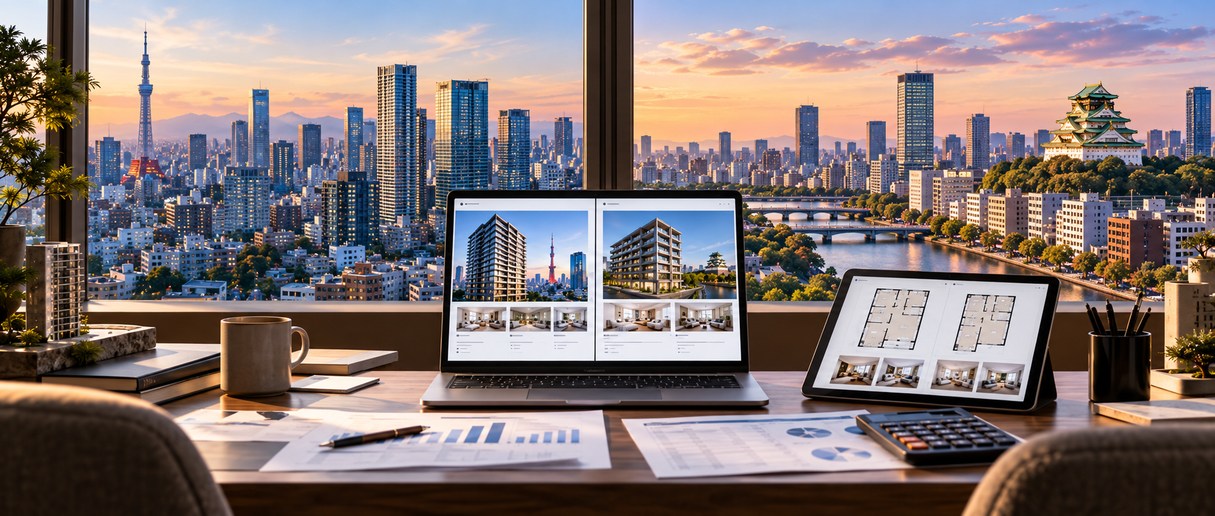
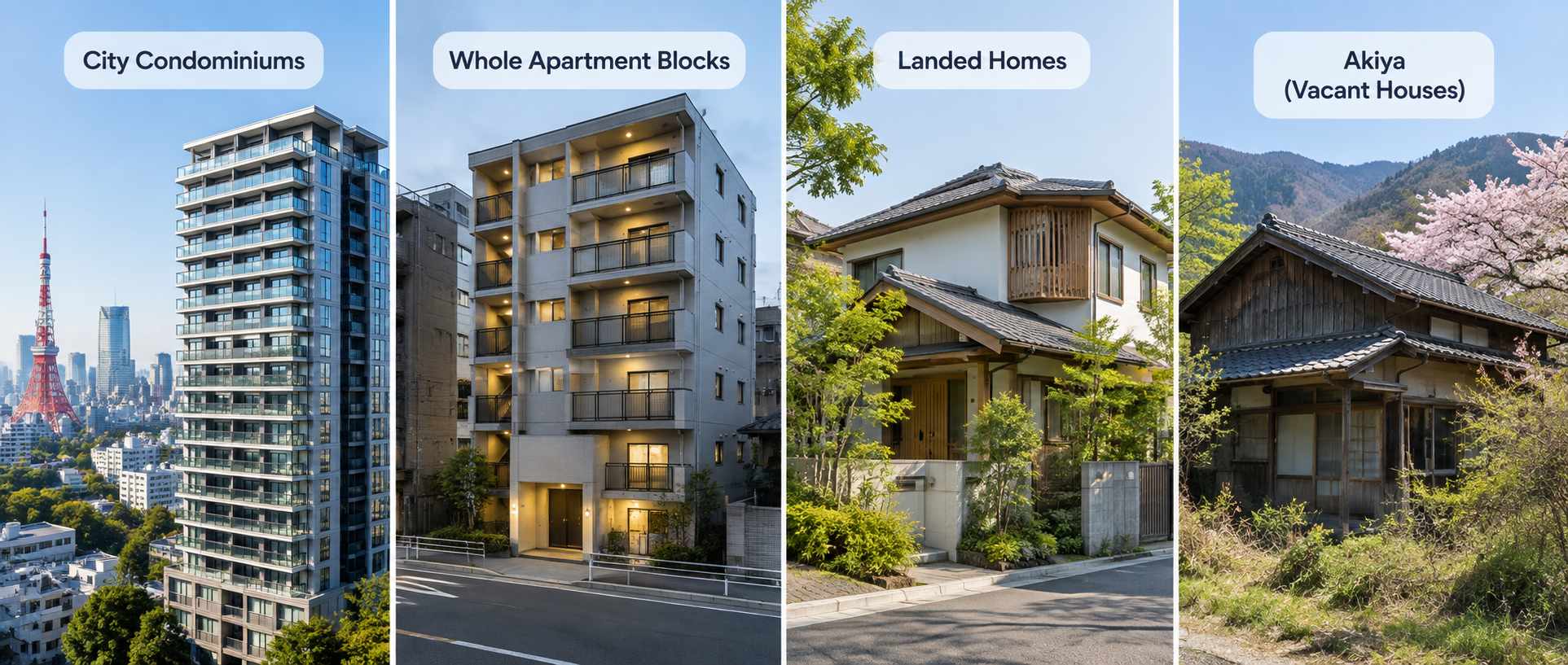
The market is broader than one-bedroom city apartments.
We can roughly divide the opportunity into four buckets:
Institutional appetite is also surging. JLL expects Japan real-estate investment to reach about ¥7 trillion in 2026, after a record ¥3.8 trillion in the first half alone. Foreign investors represented about 30% of that first-half volume.
That demonstrates the depth of global demand for Japanese real estate. But institutional capital buying offices, logistics, hotels or entire portfolios is not automatically evidence that an individual residential unit is attractively priced. It is also a warning that Singapore retail investors are not discovering an untouched market.
The weak yen has been one of the strongest hooks for Singaporeans.That improved purchasing power significantly.
The Singapore dollar has remained historically strong against the yen, improving purchasing power for Singapore buyers. But FX is not a one-way discount. A weaker yen can reduce acquisition cost today while simultaneously eroding rental income and eventual resale proceeds when converted back into Singapore dollars.
Foreign-property returns are ultimately measured in SGD for most Singapore investors.
A property can rise 10% in yen terms and still deliver a disappointing SGD return if the yen weakens further. The reverse is also true. Currency appreciation can turbocharge returns.
We would therefore treat FX as part of the investment thesis, not as a free discount.
Japanese borrowing costs are still relatively low byinternational standards, but the direction has changed.
The Bank of Japanraised its policy rate from 1% to 1.25% on 18 September 2026, the highest levelin 31 years. That further compresses the gap between property yields andborrowing costs and makes leveraged purchases more sensitive to future rateincreases.
For a Singapore buyer, cheap Japanese financing shouldtherefore no longer be treated as a permanent feature of the investment case.Model the property at higher refinancing rates as well as today's rate.
Tax changes the headline yield
A 5% gross yield is not a 5% return.
Japan's standard fixed-asset tax is generally 1.4% of the assessed taxable value, not 1.4% of the purchase price. City-planning tax of up to 0.3% may also apply in designated areas. Acquisition tax, registration tax, management fees, repairs and insurance need to be included too.
For a non-resident landlord, Japanese rental payments can be subject to 20.42% withholding, although an important exception applies when an individual rents the property as a home for themselves or relatives. The withholding is not necessarily the final tax liability and may be reconciled through a Japanese tax return.
Selling also needs careful planning. For a Japan non-resident, gains are generally subject to national income tax of about 30.63% for short-term holdings and 15.315% for long-term holdings. The five-year test is measured as at 1 January of the year of sale. A 10.21% withholding on the sale proceeds can also apply in many non-resident sales, with the final position settled through the tax return.
The useful number is therefore net yield and net exit proceeds, not the brochure yield.
NB: Buying a home in Japan does not add to your Singapore residential-property count for ABSD purposes: IRAS excludes overseas residential properties from that count. For individuals, overseas income received in Singapore is also generally not taxable, although exceptions apply. Japan's own taxes still apply, so cross-border buyers should confirm their position with a tax adviser before purchasing.
Japan still broadly allows foreigners to own real estate, and property ownership itself does not grant residency rights.
But the mood is changing.
From October 2026, property registration will require nationality information. The government is also expanding data collection on foreign ownership and acquisitions. But these are primarily transparency and monitoring measures, not a general prohibition on foreigners buying ordinary residential property.
There is also more paperwork already in force. Since April 2026, Japan has expanded post-acquisition reporting under the Foreign Exchange and Foreign Trade Act. Many non-resident buyers must report a Japanese real-estate acquisition within 20 days through the Bank of Japan to the Ministry of Finance.
There is also a useful counterweight. A government survey found buyers with overseas addresses represented 3% of new Tokyo condo purchasers in H1 2025, and the ministry said it found no significant evidence in that dataset of short-term transactions or a significant contribution to rising prices.
And very fresh data released on 15 September 2026 found that foreign individuals and foreign corporations accounted for only 0.7% of reported large-scale land acquisitions by number and 0.5% by area in the July to December 2025 reporting sample. Note that this covers only land transactions above statutory size thresholds, not all homes or condos
There is still no blanket foreign-buyer ban. What has clearly changed is the level of reporting, data collection and policy scrutiny. Singapore buyers should therefore distinguish between rules already in force, such as additional reporting, and possible future restrictions that remain under discussion.
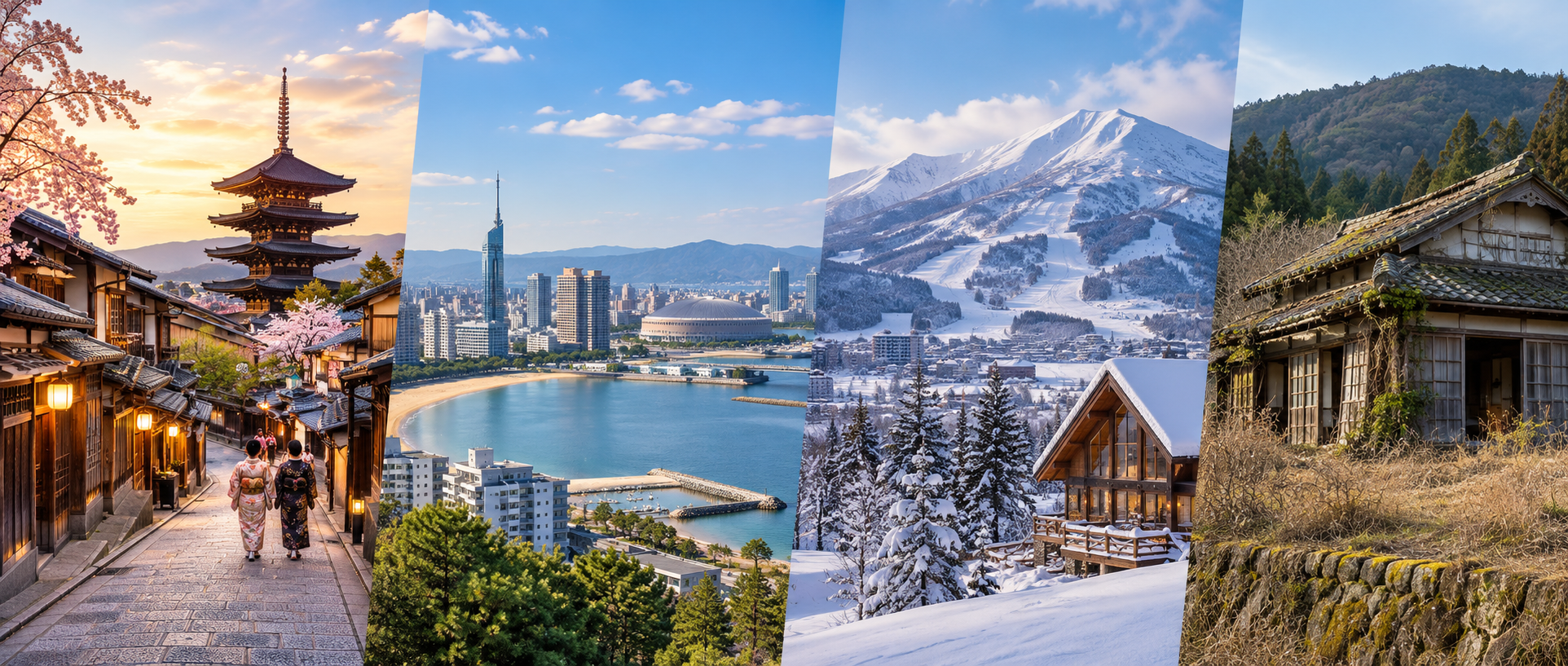
Beyond Tokyo and Osaka, buyers are increasingly looking at Kyoto, Fukuoka and Hokkaido.
Kyoto offers tourism appeal but can be more exposed to accommodation regulations and tourism policy. Fukuoka benefits from population inflows and a lower cost base. Hokkaido offers tourism and resort upside, especially around ski markets, but demand can be seasonal.
Then there are akiya.
Japan officially counted about 9 million vacant dwellings inits latest nationwide housing survey, equivalent to 13.8% of the housing stock.But that headline figure should not be confused with nine million cheap,habitable houses available for investors to buy.
The catch is equally astonishing: structural damage, renovation bills, weak resale demand, remote locations, complicated inheritance histories and limited financing.
A ¥1 million house can still become an expensive hobby.
We would call Japan selectively attractive, but no longer obviously cheap.
The opportunity remains strongest where four things overlap:
Tokyo offers depth. Osaka offers yield. Secondary cities offer selective value. Akiya offer adventure.
The danger is buying simply because Japan feels inexpensive compared with Singapore.
Before committing overseas, Singapore buyers should compare what the same capital could achieve at home.
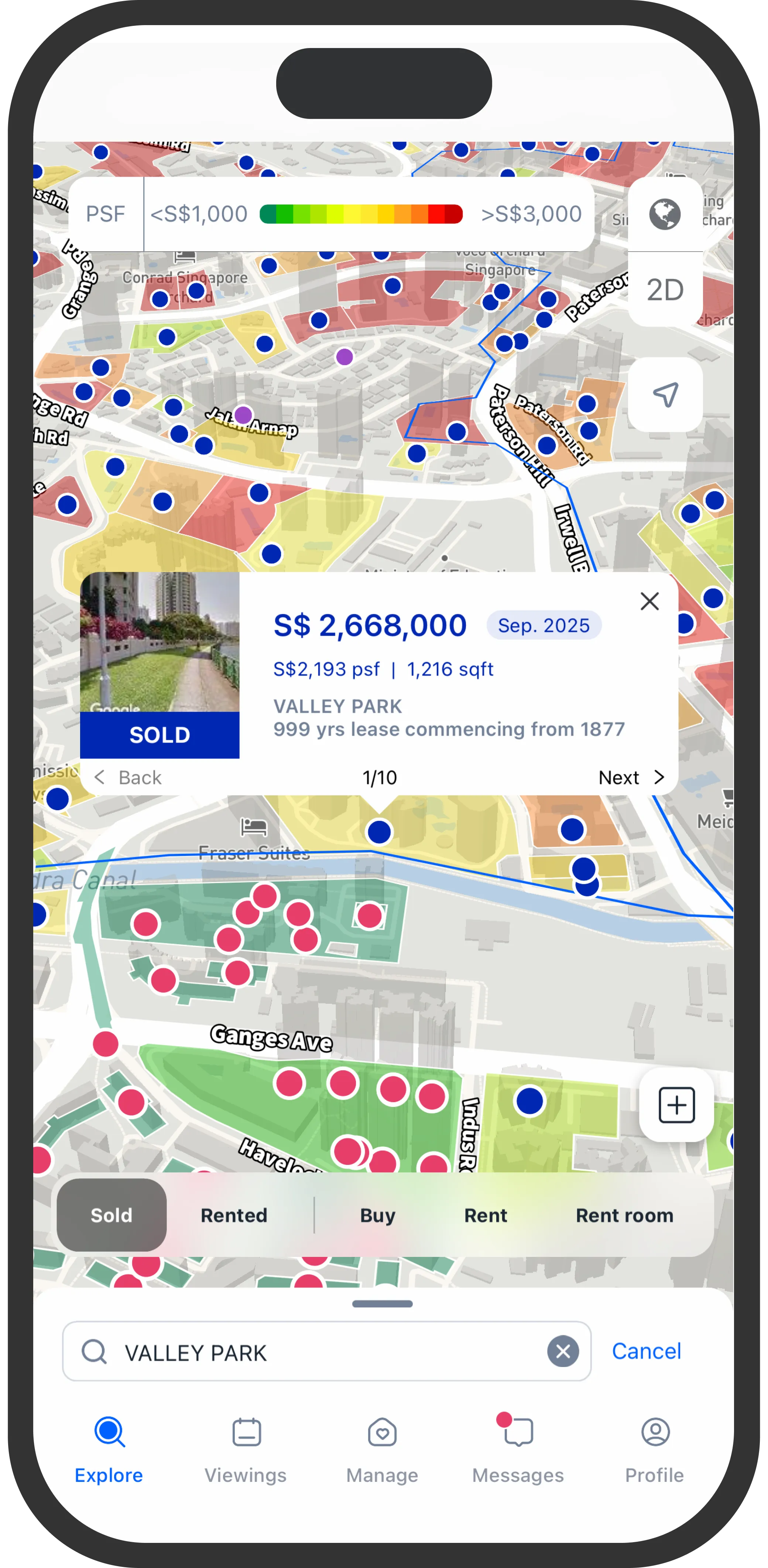
Kucing’s Price Map lets buyers explore recent Singapore transactions and compare neighbourhood pricing before deciding whether the better opportunity lies in Tokyo, Osaka or closer to home.
From price insights to viewings and offers, Kucing helps owners, agents, buyers, and tenants move through property decisions with more clarity and control.