5 Feng Shui Tips for Singapore HDBs & Condos
Discover 5 practical Feng Shui tips for Singapore homes. Improve your HDB or condo layout with simple ideas for entrances, bedrooms and living spaces.

Discover 5 practical Feng Shui tips for Singapore homes. Improve your HDB or condo layout with simple ideas for entrances, bedrooms and living spaces.
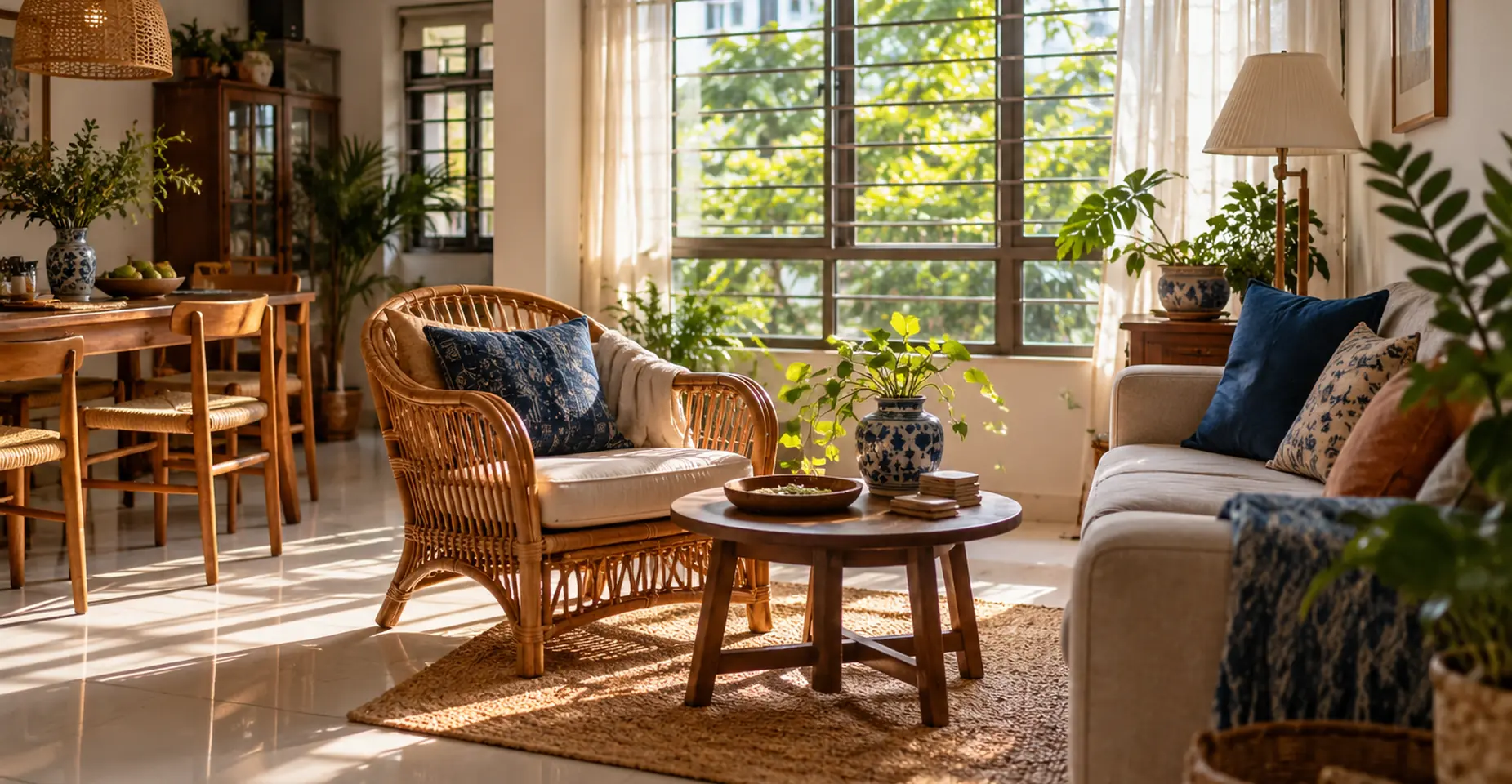
From welcoming entrances to restful bedrooms, discover how traditional Feng Shui principles can inspire a more balanced, comfortable and inviting home.
A beautiful home is not simply about expensive furniture, designer finishes or generous square footage. Sometimes, the smallest changes can make the biggest difference to how a space looks and feels.
This is where Feng Shui, the traditional Chinese practice of arranging spaces to encourage harmony with one's surroundings, offers an interesting perspective.
Rooted in centuries of Chinese philosophy, Feng Shui explores the relationship between people, their environment and the flow of qi (also written chi), traditionally understood as vital energy.
While its claims about energy, fortune and prosperity are matters of cultural belief rather than established scientific fact, many Feng Shui-inspired practices overlap with familiar interior-design principles: thoughtful furniture placement, natural light, uncluttered spaces and a sense of balance.
And the good news? You don't need a landed property or an expensive renovation to explore these ideas.
Whether you live in a compact HDB flat, a modern condominium or a spacious landed home, here are five practical Feng Shui tips you can try today.
1. Start at Your Front Door: Create a Welcoming Entrance
2. Position Your Bed for a More Restful Bedroom
3. Bring the Five Elements Into Your Living Space
4. Let Light, Air and Space Work Together
5. Create a Living Room That Encourages Connection
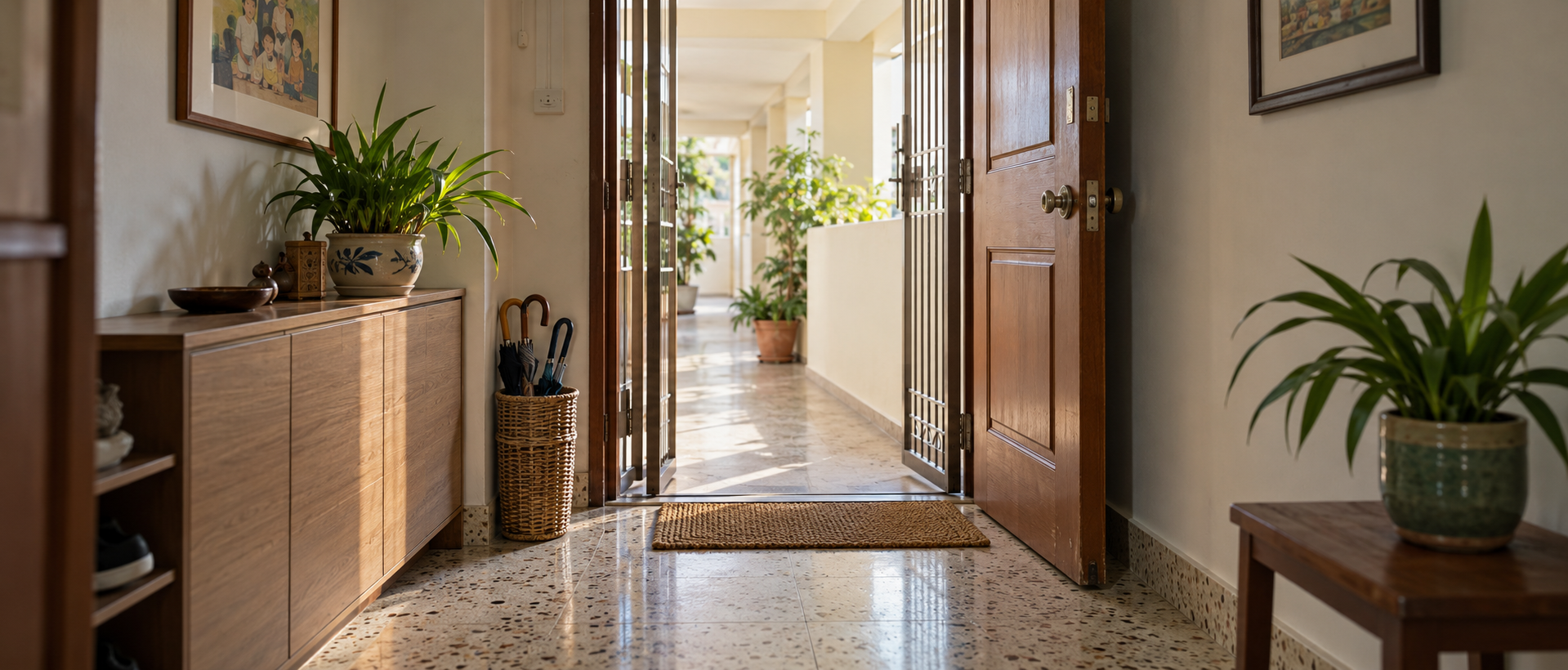
In traditional Feng Shui, the main entrance is often described as the mouth of qi — the point through which energy enters a home.
A welcoming entrance is therefore considered an important starting point for creating a harmonious living environment.
Beyond this traditional interpretation, your entrance also creates the first impression of your home.
Simple changes to try:
In many HDB flats and condominiums, the entrance opens directly into the living or dining area.
If you prefer some separation, consider a slim console, a low storage unit or a carefully positioned decorative screen.
The goal is to create a welcoming transition without obstructing movement, natural ventilation or escape routes.
Kucing Tip: Before buying new furniture, try clearing your entrance completely. You may discover that a simpler layout already feels more spacious.
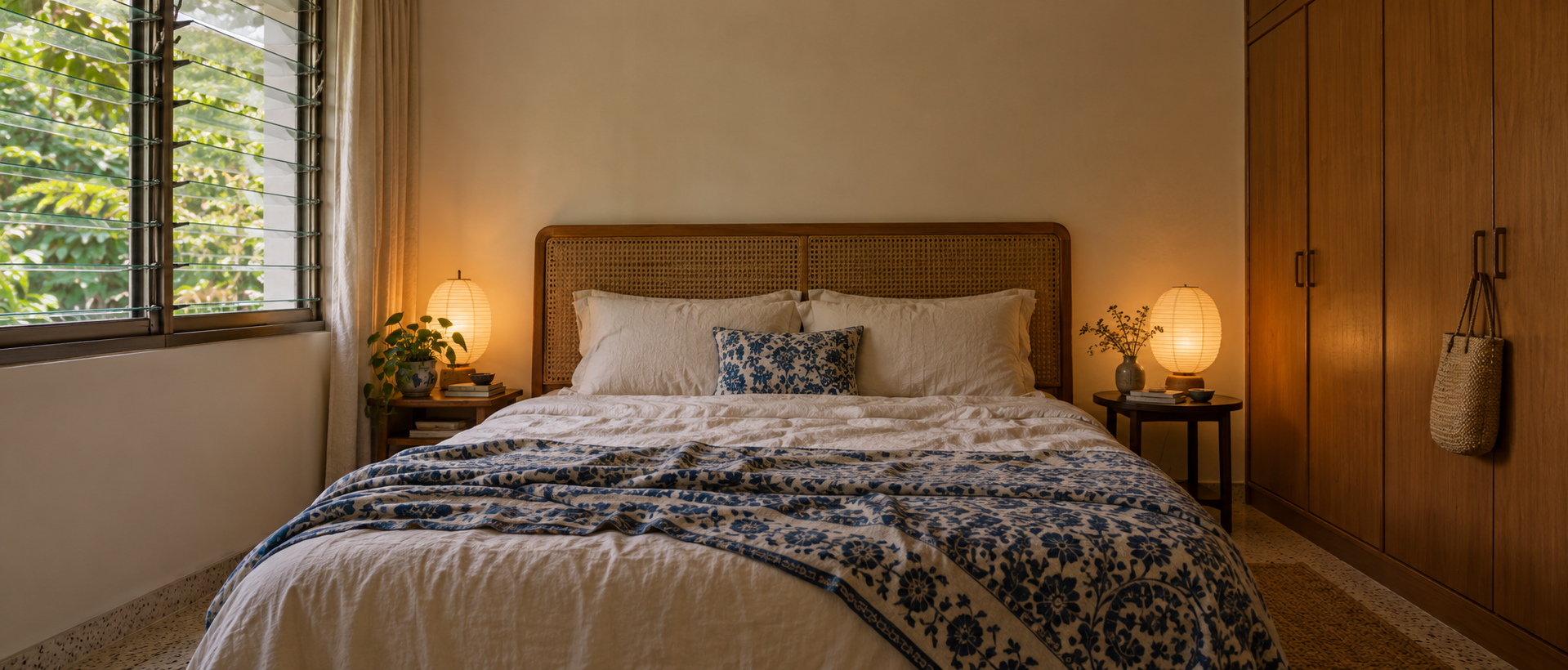
Your bedroom is one of the most personal spaces in your home.
In Feng Shui, bed placement is traditionally associated with feelings of stability, protection and rest.
One familiar principle is the commanding position: placing the bed where you can see the bedroom entrance without lying directly in line with the doorway.
The idea is to create a sense of awareness and security within the room.
Singapore bedrooms can present considerable space constraints, particularly when accommodating a queen-sized bed, wardrobe and work desk.
Don't worry if your room cannot accommodate the traditional commanding position.
Prioritise practical considerations:
Feng Shui should inspire thoughtful choices, not make your bedroom less functional.
Kucing Tip: If rearranging the bed is impossible, improving lighting, reducing clutter and introducing softer furnishings can still change the room's atmosphere.
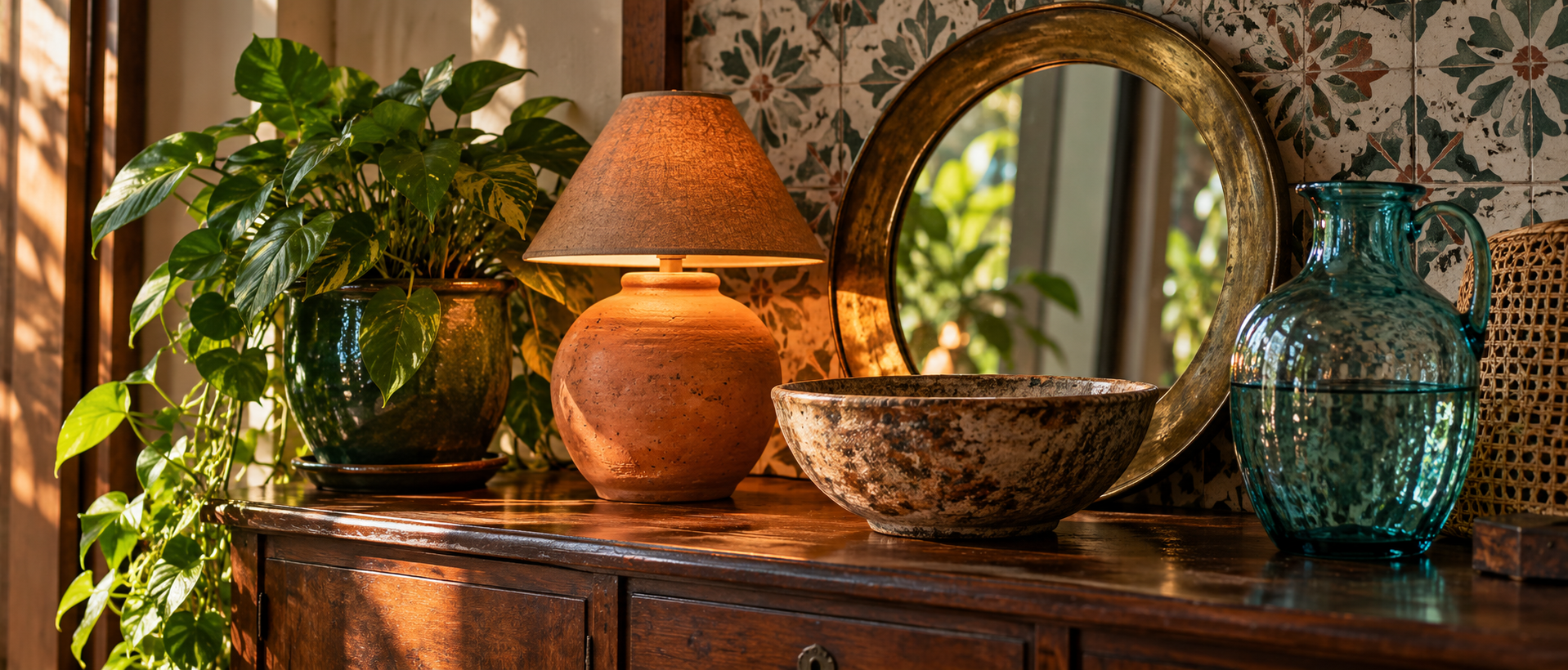
One of Feng Shui's foundational concepts is the interaction of five elements: Wood, Fire, Earth, Metal and Water.
In traditional Chinese thought, these elements represent different qualities and relationships within the natural world.
They need not be interpreted literally. You can also use them as inspiration for a coordinated interior-design palette.
Imagine a living room dominated by glossy surfaces, sharp edges and cool tones.
Adding timber furniture, warm lighting or a textured rug could make the room feel more inviting.
Conversely, a space filled with heavy wooden furniture might benefit from lighter colours and simpler decorative elements.
The objective is not to purchase an object representing every element. Instead, think about how different materials, shapes and colours work together.
With our tropical climate, indoor plants are a popular way to introduce natural elements.
Choose varieties suited to your home's actual light and ventilation conditions, and avoid allowing water to accumulate in plant trays.
If you have pets, check whether your preferred indoor plants are pet-safe.
Kucing Tip: Before buying new décor, look at the materials already present in your home. Sometimes, moving an existing plant or replacing a cushion cover is enough to refresh the space
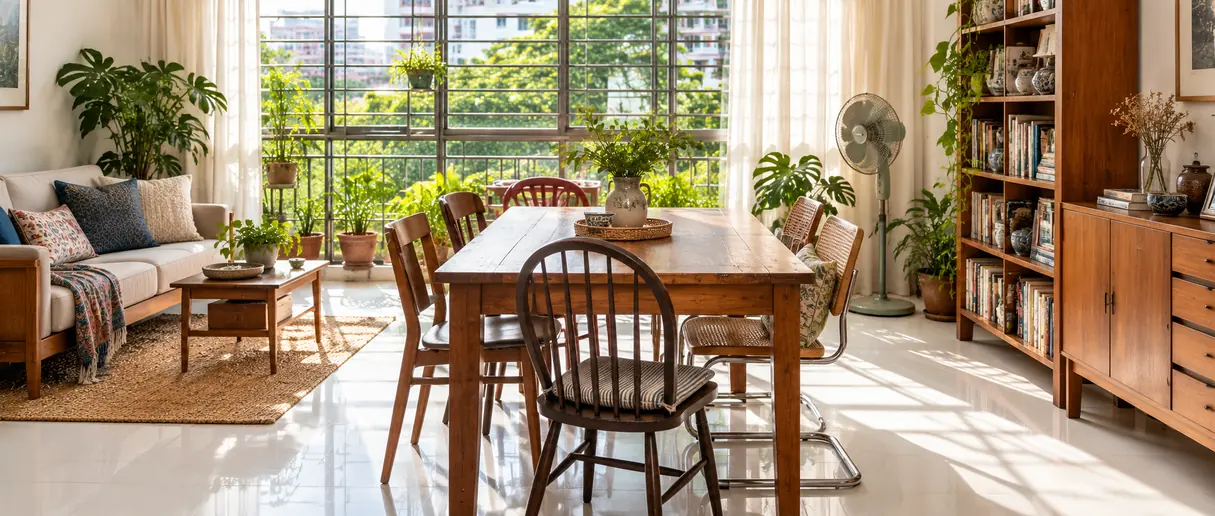
Traditional Feng Shui places importance on the movement of qi throughout a home.
In practical interior design, this offers an opportunity to consider three important qualities: natural light, ventilation and unobstructed circulation.
A room that feels dark, cramped or difficult to navigate may benefit from a simpler arrangement.
1. Make the most of daylight
Avoid placing oversized furniture directly in front of windows. Use curtains or blinds to manage glare and heat while allowing useful daylight indoors.
2. Improve ventilation
Open windows when outdoor conditions permit, and maintain fans, ventilation systems and air-conditioning equipment appropriately.
3. Create clear pathways
Arrange furniture so household members can move comfortably between entrances, seating areas and other frequently used spaces.
4. Be selective with decorative items
Too many ornaments can make a compact home feel visually crowded. Give meaningful objects room to stand out.
5. Use mirrors thoughtfully
Mirrors can reflect light and create an impression of depth. Position them to reflect pleasant views or brighter areas rather than clutter.
Open-plan living and dining areas are common in Singapore.
Instead of dividing such spaces with bulky partitions, consider using rugs, lighting and furniture arrangements to define different zones.
A well-positioned sofa, for example, can distinguish the living area from the dining space without making the entire room feel enclosed.
Similarly, keeping a clear route to the balcony or windows can improve everyday usability.
Kucing Tip: Stand at your front door and look towards the main living area. Can you move through the space comfortably? Is the room visually crowded? This simple exercise can highlight opportunities for improvement.
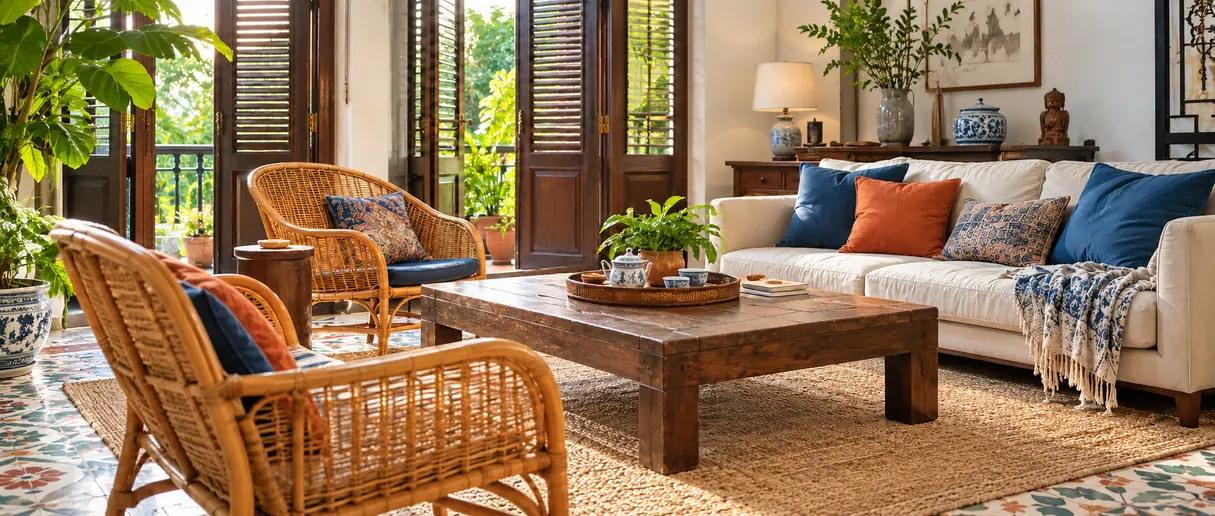
The living room is often where household members gather, entertain guests and unwind.
In Feng Shui, its arrangement is traditionally associated with social harmony and the way energy circulates through shared spaces.
From an interior-design perspective, the layout can also influence how comfortably people interact.
Instead of automatically positioning every seat towards the television, consider creating a more sociable seating arrangement.
For example:
A harmonious home doesn't need to be minimalist.
Artwork, meaningful souvenirs, family photographs and decorative objects can make a living room feel personal and inviting.
The key is to give each piece a purpose and sufficient visual space.
For smaller homes, multifunctional furniture and concealed storage can help maintain a tidy appearance without sacrificing comfort.
Traditional Feng Shui associates particular colours with the five elements.
However, there is no universal colour scheme that suits every home or guarantees particular life outcomes.
Instead, consider the room's natural light, existing finishes and the atmosphere you want to create.
Warm neutrals, timber accents and selected colours can work beautifully in a contemporary Singapore apartment.
Kucing Tip: Before investing in new furniture, experiment with different arrangements using the pieces you already own. You might discover a more comfortable layout at no cost.
If you've explored Feng Shui before, you may have encountered the Bagua map.
This traditional framework divides a space into sectors associated with different aspects of life, such as relationships, health and prosperity.
There are several Feng Shui schools, and their methods for applying the Bagua differ. Some use compass directions, while others orient the map around the entrance.
For homeowners interested in following a particular tradition, it is worth understanding which school or method they are using before making decisions.
For everyone else, the practical tips above offer an accessible way to explore Feng Shui-inspired design without relying on complex calculations.
You don't need a renovation budget to begin.
Small adjustments can make your home feel more organised, welcoming and comfortable.
And unlike a major renovation, most of these changes cost little or nothing.
Feng Shui is a traditional Chinese practice based on beliefs about the relationship between people, spaces and qi.
There is no established scientific evidence that Feng Shui arrangements directly produce wealth, good fortune or improved health.
However, practical changes inspired by Feng Shui — such as better lighting, thoughtful layouts and reducing clutter — can improve how a home functions and feels.
Absolutely. Feng Shui-inspired interior arrangements can be explored in homes of different sizes and layouts.
For HDB flats, focus on changes that do not require structural alterations, such as furniture placement, lighting, colour schemes and organisation.
Any renovation must comply with applicable HDB requirements.
That's perfectly fine.
Many Singapore bedrooms have fixed constraints, including built-in wardrobes, air-conditioning units and limited floor space.
Prioritise comfort, accessibility and safety. You can still improve the atmosphere through lighting, textiles and organisation.
Not necessarily.
For general home organisation and Feng Shui-inspired interior design, you can explore many of the ideas yourself.
If you wish to follow a particular Feng Shui tradition involving compass directions, the Bagua or personal calculations, a suitably experienced practitioner may offer guidance.
It doesn't have to be.
Some of the simplest adjustments involve rearranging furniture, removing clutter and making better use of natural light.
Expensive ornaments, decorative objects and renovation works are not essential to enjoying a more welcoming home.
Feng Shui offers a different way of looking at the relationship between our homes and everyday lives.
Whether you follow its traditional philosophy or simply appreciate its design-inspired ideas, the underlying invitation is worthwhile: take a closer look at your surroundings and consider how they could better support the way you live.
For Singapore homeowners and tenants, where every square metre matters, thoughtful arrangements can be especially valuable.
Ultimately, the best home isn't the one that follows every rule. It's the one that feels comfortable, functional and unmistakably yours.
A thoughtful interior starts with choosing the right property.
Whether you're searching for a new home, exploring neighbourhoods or comparing property prices across Singapore, Kucing helps you make more informed property decisions.
Explore property insights, discover listings and manage your property journey in one place.
From price insights to viewings and offers, Kucing helps owners, agents, buyers, and tenants move through property decisions with more clarity and control.