Green Condo or Green Marketing? What BCA Green Mark Really Means for Singapore Homebuyers in 2027 ?
What does BCA Green Mark actually mean for Singapore property buyers? We unpack Green Mark v7, energy savings,maintenance costs,resale premiums and what to check before buying
Green Condo or Green Marketing? What BCA Green Mark Really Means for Singapore Homebuyers
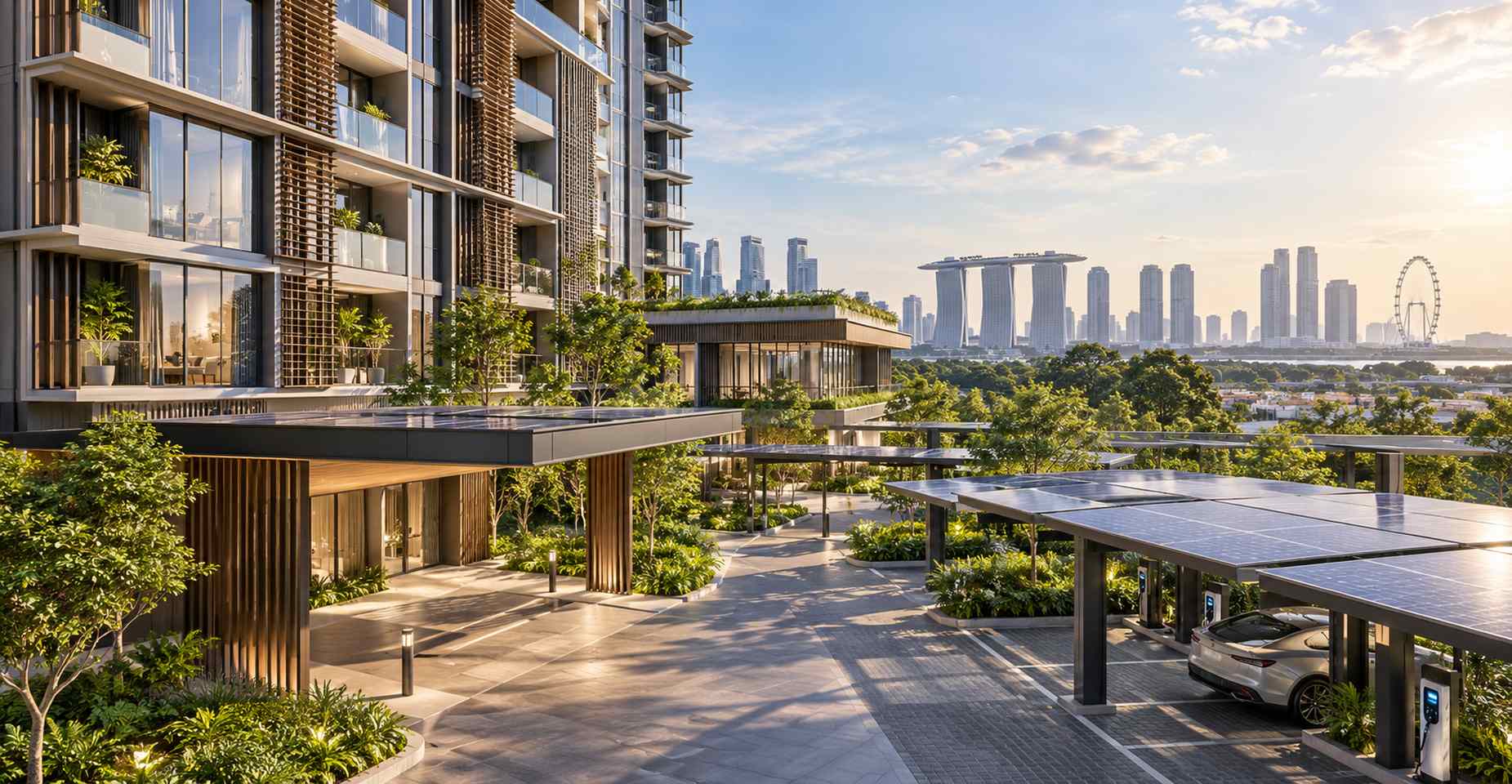
Singapore property brochures have become very green. Roof gardens. Solar panels. EV chargers. Leaves floating over artist impressions.
But when a condominium says Green Mark Platinum, GoldPLUS, Super Low Energy or now Green Mark Version 7, what does that actually mean to someone buying, living in, renting out or eventually selling the property?
That is the more useful question. Your source material frames the issue exactly this way: Green Mark matters only when we translate the badge into comfort, operating costs, maintenance, rentability and eventual resale value.
BCA launched Green Mark in 2005. By March 2025, Singapore had 2,590 Green Mark-certified buildings. BCA estimates they collectively save more than 4.2 billion kWh of electricity annually, worth about S$1.3 billion in annual energy-cost savings.
This sits behind Singapore's 80-80-80 by 2030 ambition: green 80% of buildings by gross floor area, have 80% of new developments achieve Super Low Energy standards from 2030, and improve best-in-class building energy efficiency by 80% versus 2005 levels. Singapore Green Plan 2030
So Green Mark is no longer a niche sustainability label. It is increasingly part of the operating standard of Singapore property.
2. Green Mark v7 changes the conversation
The important 2027 development is Green Mark Version 7, launched in September 2026.
BCA says v7 introduces more flexible certification pathways, a new energy-only rating route for existing buildings, streamlined maintainability criteria, portfolio certification and a new SLE70 tier for buildings achieving at least 70% energy savings.
New Green Mark 2021 applications stop from 1 April 2027, while ongoing GM:2021 projects must complete certification by end-2027.
For buyers, this means labels require context. An older GoldPLUS or Platinum badge is not directly interchangeable with a newer v7 energy rating. Check the certification year, scheme version and whether certification is provisional or verified, rather than comparing badges like hotel stars. BCA's verification process exists specifically to confirm that promised sustainability measures were actually installed and perform as committed.
3. What residents actually notice
Green Mark has evolved beyond efficient air-conditioning. Recent schemes consider areas such as carbon, maintainability, smart systems, resilience and health and wellbeing.
In everyday life, that can translate into better shading, more efficient common-area cooling and lighting, natural ventilation, water efficiency, EV infrastructure and smarter building controls. Your source notes the important caveat: certification does not guarantee a tiny electricity bill. Unit orientation, glazing, afternoon sun, air-conditioning habits and building management still matter.
Green architecture can improve the machine. Residents still operate it
4. Does greener mean cheaper maintenance?
Not necessarily.
Efficient pumps, chillers, lighting and controls can reduce operating expenditure. BCA research has found lifecycle energy and water savings can outweigh additional green-building costs.
But a beautifully landscaped condominium with sophisticated cooling systems, water features, sensors and extensive facilities can still have hefty MCST expenses.
For buyers, the maintenance statement beats the marketing brochure. We should inspect MCST accounts, sinking funds, common-area electricity consumption, equipment age and upcoming replacement expenditure. Your source correctly warns that a green plaque cannot tell us whether an estate is financially well managed.
5. Is there really a green property premium?
A Singapore study covering almost 37,000 housing transactions estimated an approximately 4% Green Mark premium after controlling for other characteristics. Another study using within-development price changes found certification itself associated with roughly a 3% increase.
A larger later study covering roughly 300,000 transactions between 2005 and 2017 also found evidence of a green premium.
Interesting? Absolutely.
A guarantee that your Green Mark condo will outperform its neighbour? No.
Location, tenure, schools, MRT access, layout, project quality, supply and purchase price can easily dominate sustainability certification. That is why your attached research recommends treating Green Mark as a differentiator, not a promise of appreciation.
6. Older buildings face a sustainability gap
Singapore is now pushing harder on existing building performance.
The Mandatory Energy Improvement regime, effective from 30 September 2025, can require qualifying energy-intensive buildings of at least 5,000 sqm GFA to undergo energy audits and implement measures reducing consumption by at least 10%.
But there is an important distinction: the current MEI regime principally covers energy-intensive commercial, healthcare, institutional, sports/recreation and qualifying mixed-use buildings, not ordinary standalone residential estates.
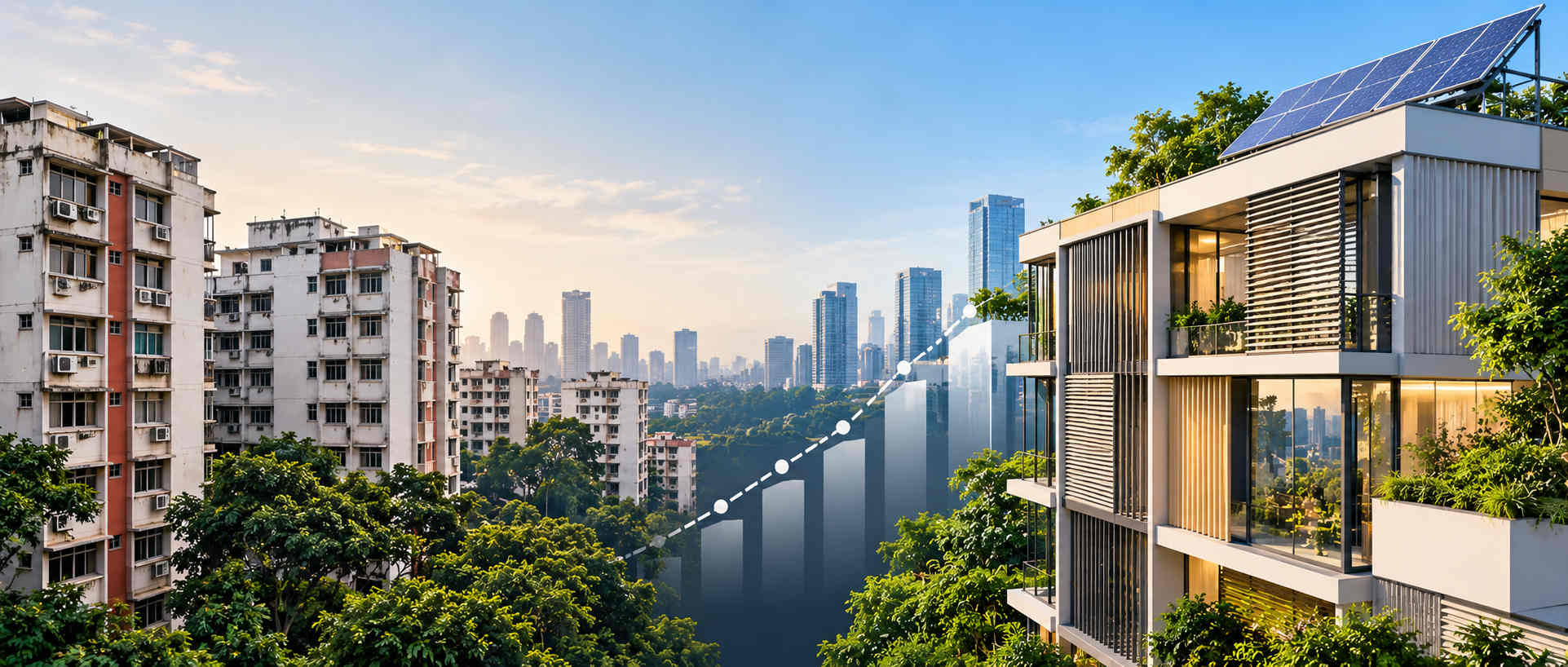
The wider implication still matters. Newer buildings are being designed against progressively tougher energy standards. Older residential stock may therefore face a growing sustainability gap, even where it is not directly subject to MEI.
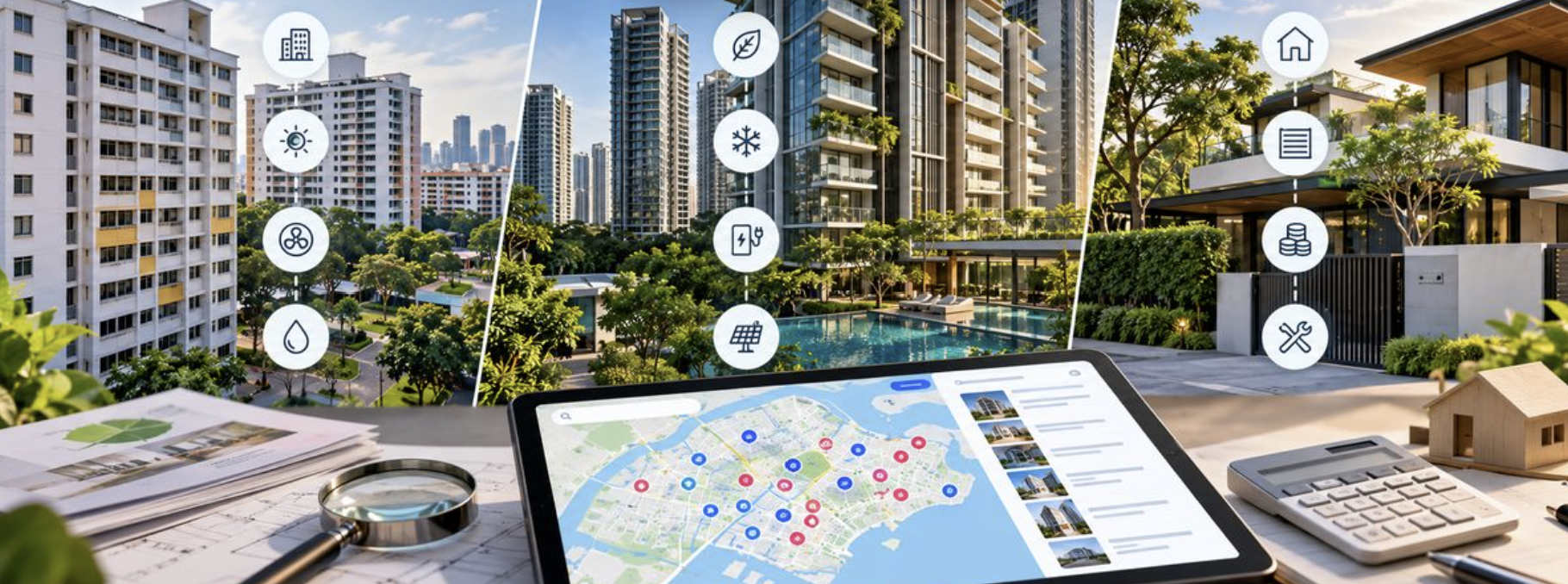
7. HDB, condos and landed homes are not the same
For private condos, Green Mark can affect common systems, shared facilities and estate operating efficiency.
For HDB estates, sustainability increasingly appears through precinct-level design, solar deployment, greenery and energy-saving systems rather than through the same buyer-facing investment narrative.
For landed homes, the badge itself is less important than the actual specification: solar feasibility, shading, insulation, glazing, cooling efficiency, water use and renovation choices.
The same green principle applies. The route is different.
8. HDB, condos and landed homes are not the same
Before paying a premium for “green”, we would check:
Green Mark version and certification date
actual certification level or energy rating
provisional versus verified status
unit orientation and afternoon sun
glazing and ventilation
common-area energy consumption
MCST operating expenses and sinking fund
cooling and mechanical systems
EV charging
solar deployment
water and landscape systems
likely retrofit or replacement costs
BCA maintains a Green Mark Buildings Directory, so buyers do not need to rely solely on developer marketing material
The broader lesson is simple:
A green building may be a better building. That does not automatically make it a better investment.
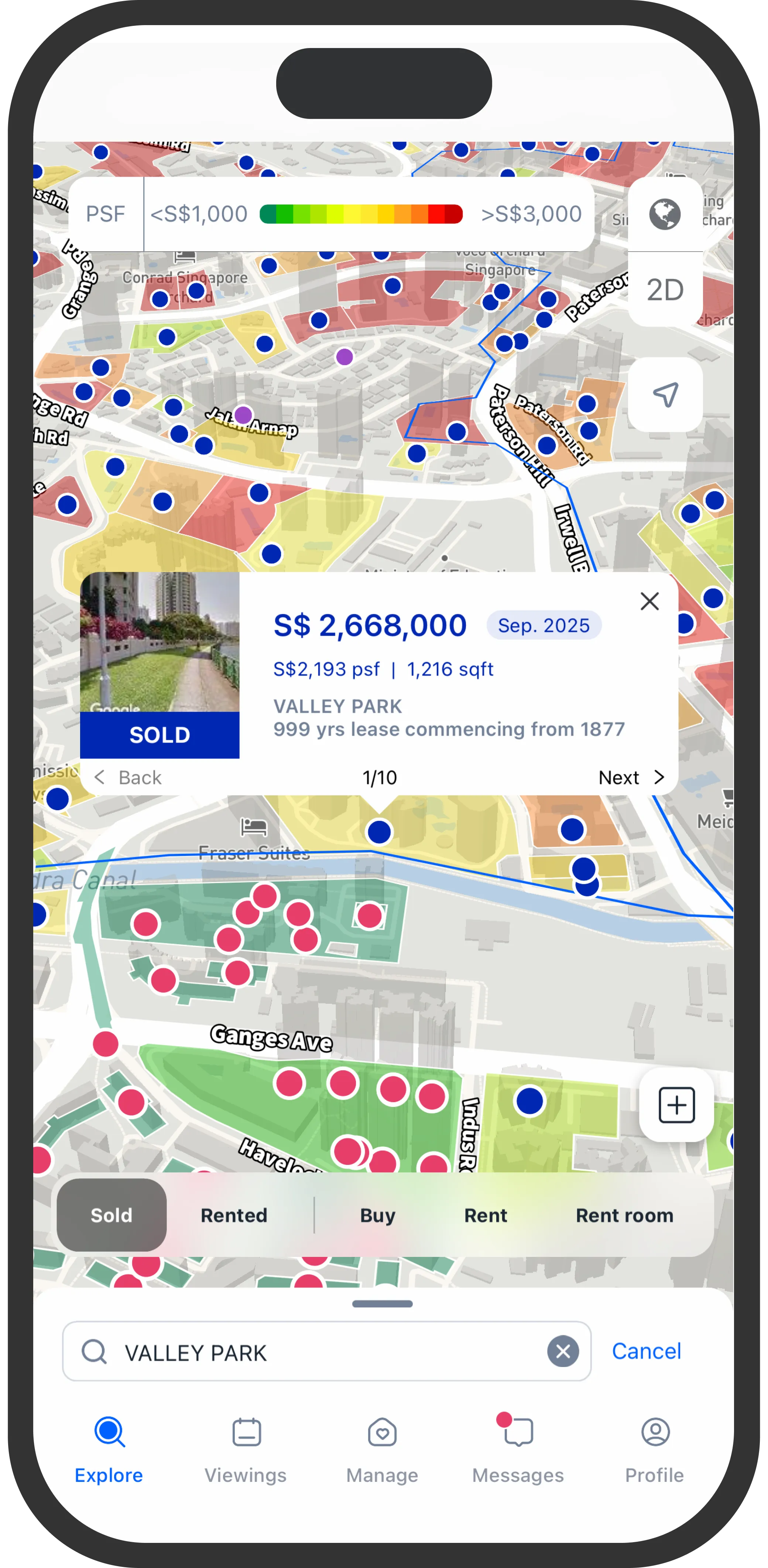
With Kucing's Price Map, buyers and owners can compare actual nearby transactions alongside project characteristics before deciding how much that green badge is really worth.
From price insights to viewings and offers, Kucing helps owners, agents, buyers, and tenants move through property decisions with more clarity and control.