Singapore Property Decoupling in 2027: Is It Still Worth It ?
Is property decoupling still worth it in Singapore in 2027? Explore ABSD savings, hidden costs, financing risks and real-world calculations.

Is property decoupling still worth it in Singapore in 2027? Explore ABSD savings, hidden costs, financing risks and real-world calculations.

Two properties. One couple. A potential six-figure tax saving. Property decoupling sounds like a clever way to grow your real estate portfolio in Singapore. But beneath the attractive numbers lies a financial decision that deserves a closer look.
With Additional Buyer's Stamp Duty (ABSD) reaching 20% for Singapore Citizens buying a second residential property, decoupling can appear irresistible.
At Kucing, we believe the smarter question is not simply "How much ABSD can we save?" but "Will decoupling actually make us wealthier?"
Your Guide to Property Decoupling [ Updated: 10th Oct. 2026 ]
2. How Much Does Decoupling Really Cost?
4. The Rental Yield Reality Check
6. When Is Decoupling Worth It?
7. Make Your Next Property Move Smarter
Meet Alex and Sarah, a fictional Singaporean couple who jointly own a condominium valued at S$1.8 million. They want to purchase a second condo for S$1.5 million while keeping their existing home.
Without restructuring their ownership, the second purchase attracts S$300,000 in ABSD, assuming both are Singapore Citizens and no remission applies.
Under Singapore's current IRAS ABSD framework:
Alex and Sarah consider transferring Sarah's entire 50% ownership stake to Alex. Sarah could then purchase the second condo as her first residential property, assuming she no longer holds any other residential property interest.
The potential ABSD saving is substantial. But the transfer itself is not free.
Property decoupling involves one co-owner transferring their ownership interest to the other, commonly through a part-sale or, where appropriate, a gift.
Let's examine Alex and Sarah's S$1.8 million condo.
Sarah's 50% share is worth S$900,000. Based on current Buyer's Stamp Duty rates, transferring that share would attract S$21,600 in BSD.
Our example assumes Alex owns no other residential property, the transfer qualifies for no ABSD, and Seller's Stamp Duty does not apply.
CPF principal and accrued interest may need to be refunded upon transfer. This is not necessarily a permanent financial loss, but it can create a significant funding requirement.
Mortgage refinancing, early repayment penalties and the remaining owner's borrowing capacity also matter.
A S$26,600 estimate can therefore become considerably more expensive.
Let's compare two options.
Scenario A: Keep joint ownership. Both spouses retain ownership of their existing condo and purchase another property. They must pay ABSD on the second purchase.
Scenario B: Decouple first. One spouse transfers their entire share of the existing condo to the other. The spouse who no longer owns a property then purchases a new condo, potentially without ABSD.
Potential acquisition and restructuring costs
Illustrative S$1.5M second purchase; assumes qualifying decoupling, S$5,000 legal fees and no other restructuring costs.
Here is the financial comparison:
By decoupling before purchasing the second condominium, the couple could potentially reduce their combined stamp duty and illustrative legal costs by S$273,400.
Assumptions: Both spouses are Singapore Citizens, the ownership transfer is genuine and legally effective, neither has other property interests affecting ABSD, and no additional ABSD liability or applicable relief changes the comparison.
However, this is not a guaranteed net saving. Our comparison excludes mortgage refinancing charges, possible Seller's Stamp Duty, CPF-related funding requirements and other expenses.
Decoupling also does not automatically increase the couple's borrowing capacity. The remaining owner must qualify to take over the existing mortgage, while the purchasing spouse must qualify for financing on the new property.
Let's assume the second S$1.5 million condo generates S$4,500 monthly rent.
That represents S$54,000 in annual gross rental income, or a 3.6% gross rental yield.
Sounds promising. But gross yield ignores the expenses that determine whether an investment makes financial sense:
Suppose operating expenses and vacancies consume 25% of rental income. The remaining S$40,500 represents a 2.7% yield before mortgage interest and income tax.
That distinction matters.
A property producing rental income is not automatically a profitable investment. Financing costs, future appreciation and the amount of cash invested determine the actual return.
Some buyers explore 99-1 ownership structures, where one party owns 99% and the other holds 1%. Transferring that smaller interest can appear cheaper than transferring half a property.
However, ownership arrangements must reflect genuine legal and beneficial interests. Artificial transactions intended to obtain improper stamp duty advantages can face scrutiny.
In its May 2026 judgment, Wong Mei Lee Millie v Ngor Shing Rong Jake, Singapore's Court of Appeal addressed ownership intentions, beneficial interests and potential illegality in a 99-1 arrangement.
The lesson is straightforward: a smaller ownership share does not automatically make a decoupling arrangement compliant or financially sensible.
We recommend obtaining independent legal and tax advice before restructuring ownership.
Decoupling may be financially attractive when the potential ABSD saving substantially exceeds transfer costs, the remaining owner can comfortably finance the existing mortgage, and the couple has sufficient liquidity to purchase another property.
Conversely, the strategy may be less attractive when CPF refunds create cash-flow pressure, refinancing is expensive, or the second property's rental returns are weak.
Before deciding, we recommend testing three scenarios:
The best strategy is the one that strengthens long-term financial returns, not simply the one with the smallest upfront tax bill.
At Kucing, Singapore's real estate co-pilot, we believe informed property decisions start with reliable market data.
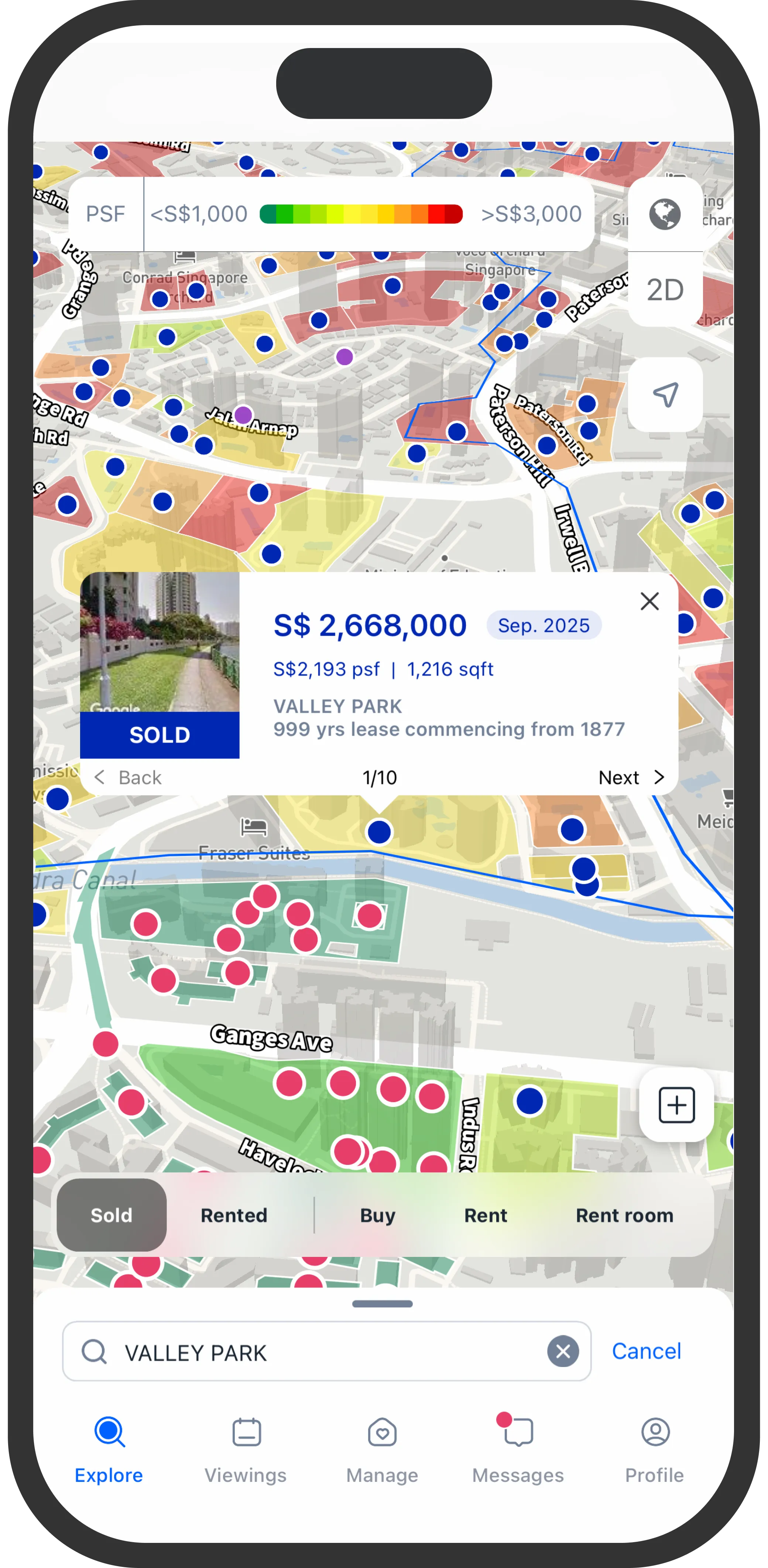
Our Unified PropSpace brings property price visualisation, recent transaction insights, viewing arrangements, favourites, conversations and offers into one connected experience.
Before committing to a second property, explore comparable transactions, evaluate neighbourhood prices and assess whether your target investment justifies its costs.
Two properties may be better than one. But only when the numbers agree.
Explore Singapore property opportunities with Kucing
Disclaimer: This article provides general information, not legal, tax or financial advice. Figures are illustrative and based on rules applicable in October 2026. Obtain professional advice before undertaking any ownership transfer.
From price insights to viewings and offers, Kucing helps owners, agents, buyers, and tenants move through property decisions with more clarity and control.