From Garden City to Living Room: Singapore’s Home Plant Guide 2027
Bring Singapore’s Garden City home with practical tips on choosing, buying, placing, maintaining and disposing of plants in HDBs and condos.

Bring Singapore’s Garden City home with practical tips on choosing, buying, placing, maintaining and disposing of plants in HDBs and condos.
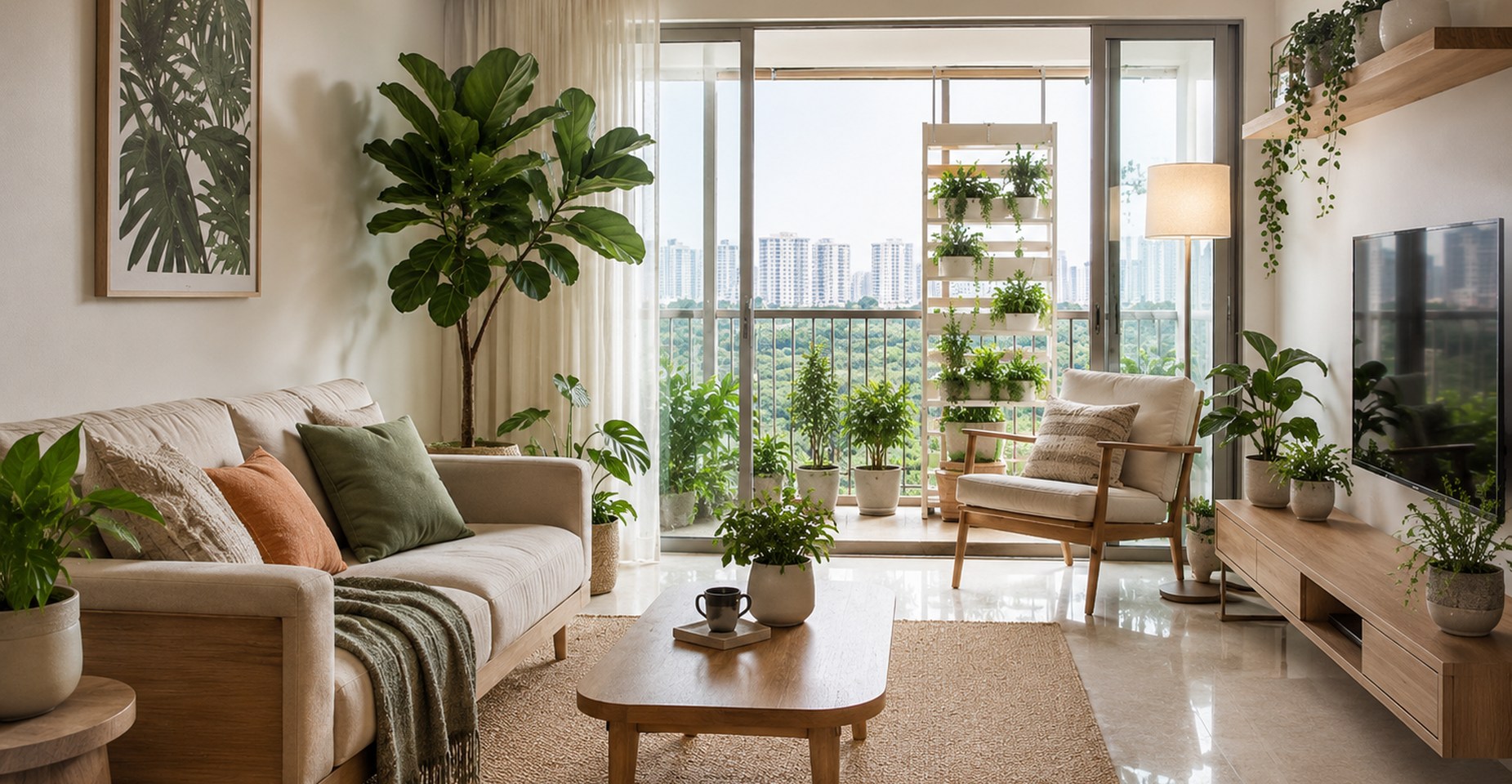
Singapore’s green identity began as public policy, not interior styling. Lee Kuan Yew introduced the Garden City vision in 1967, setting Singapore on a path toward tree-lined roads, parks and cleaner neighbourhoods. That vision has since evolved into today’s City in Nature strategy, with URA’s Master Plan 2025 continuing to strengthen parks, nature ways and park connectors across the island.
For HDB and condo owners, the same principle works at a smaller scale: greenery succeeds when it is planned. The right plant in the right light can transform a room. The wrong plant can become an expensive brown stick occupying premium floor area.
Inside this guide
Home gardening is not a tiny niche. NParks’ Community in Bloom programme now includes more than 2,000 community gardening groups and over 48,000 gardening enthusiasts across Singapore.
That gives HDB and condo residents another route to greenery when balcony space is limited. A community garden can offer practical experience before we attempt to turn three square metres of balcony into Kew Gardens.
Before buying anything, inspect four things: light, heat, ventilation and space.
A shaded HDB living room needs different plants from a west-facing condo balcony receiving direct afternoon sun. Measure the available footprint too. Nursery plants have a curious habit of becoming larger after we bring them home.
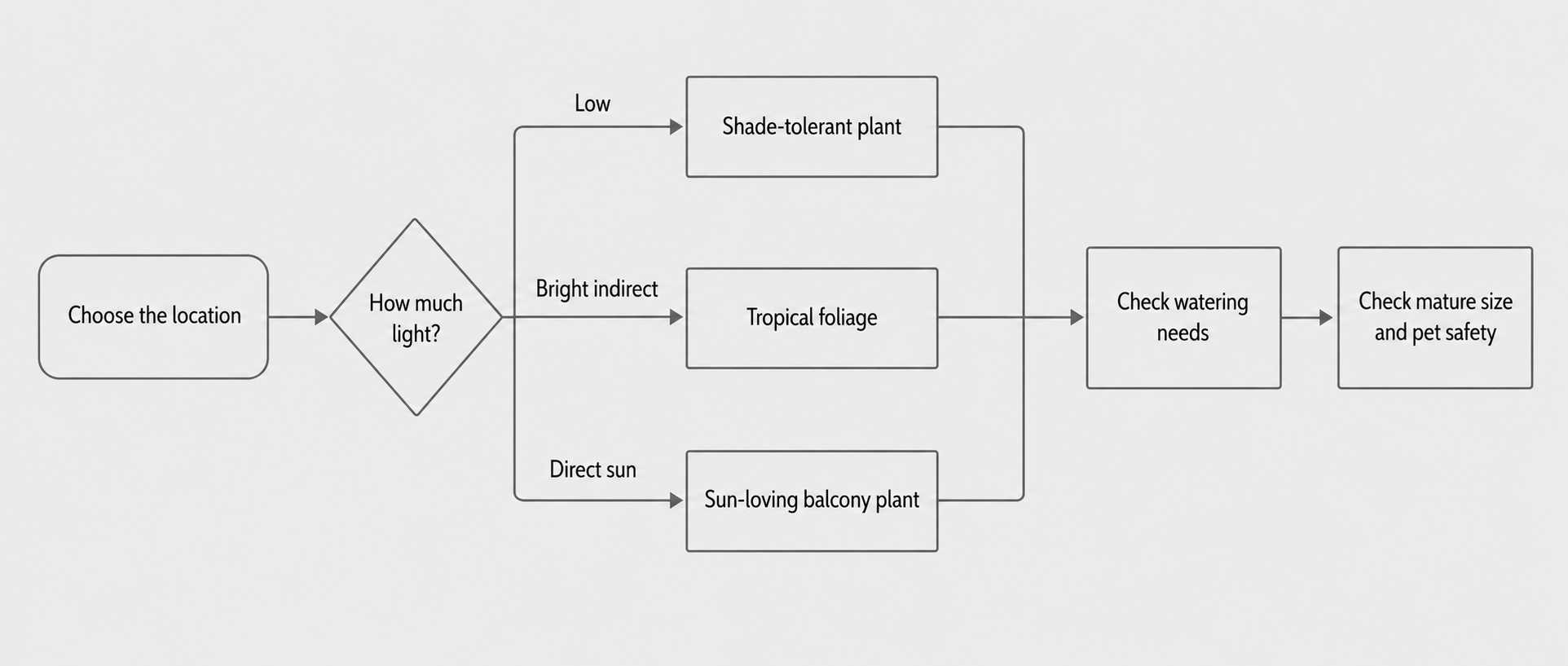
Guide to choosing indoor plants in Singapore based on sunlight, ventilation, heat and available space
For lower-light interiors, look at shade-tolerant foliage and ferns. Bright rooms can accommodate tropical foliage and climbing plants. Sunny balconies are better suited to tougher outdoor species, herbs and flowering plants.
For air-conditioned interiors, choose species that tolerate drier conditions and resist the temptation to compensate with constant watering.
For low-maintenance owners, prioritise hardy plants with forgiving watering cycles. For pet households, check toxicity before buying. A beautiful plant becomes considerably less charming when the cat decides it is salad.
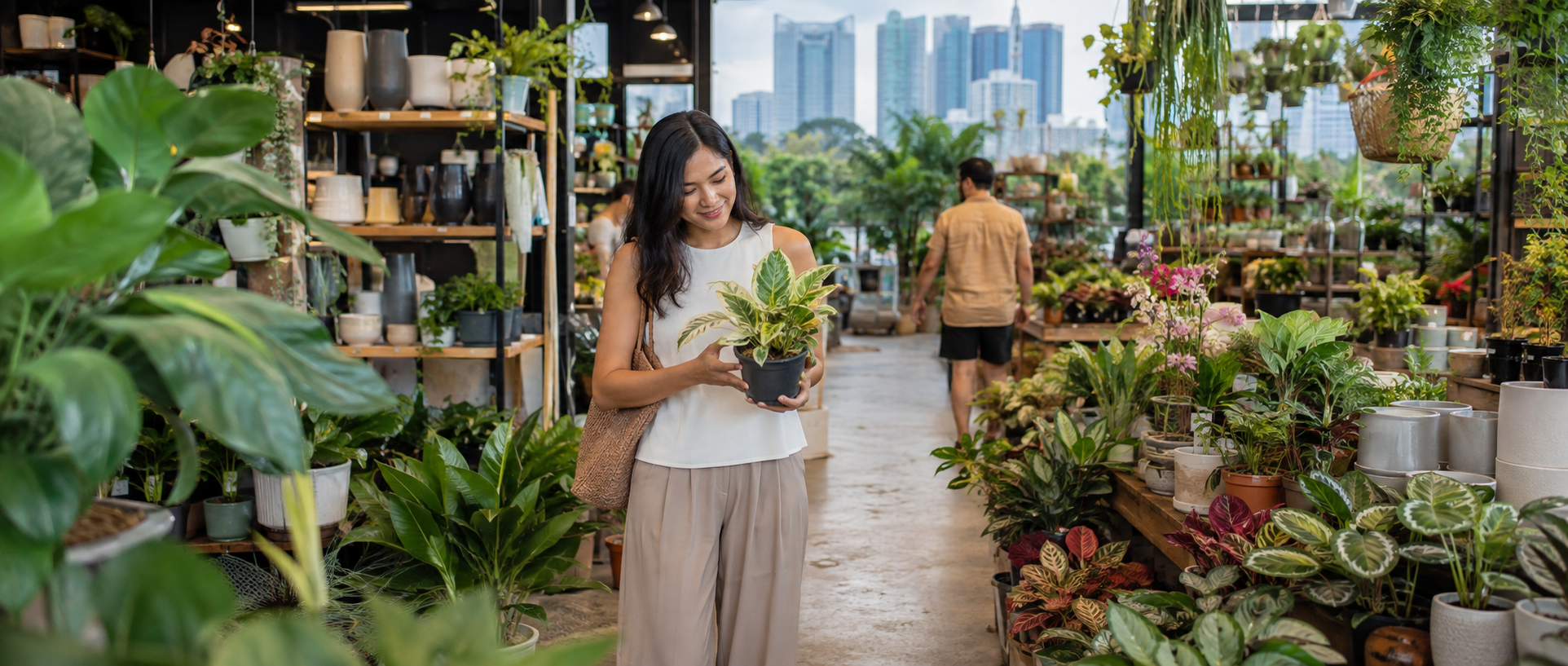
Singapore has a broad nursery ecosystem. NParks maintains a Nursery Accreditation Scheme covering established operators including Far East Flora, Woon Leng Nursery and Nyee Phoe Flower Garden.
Shop by mission:
Far East Flora’s Clementi centre alone spans 11 storeys and carries more than 500 plant varieties alongside flowers, garden products and home décor. Qanvast also maps aesthetic plant shops by neighbourhood, which is useful when plant shopping becomes a Saturday expedition.
Buying an exotic plant overseas and putting it into hand luggage is not necessarily a harmless souvenir.
NParks states that import requirements apply whether plants arrive by hand-carry, post, courier or freight. Ornamental plants and nursery stock may require a phytosanitary certificate and import permit before entering Singapore.
The practical rule is simple: check NParks requirements before purchasing overseas, especially when soil, growing media, seeds or protected species are involved.
Balconies need plants that can handle their microclimate. High-rise wind, direct sun and heavy rain can be surprisingly harsh. Secure pots properly and avoid precarious placement along ledges.
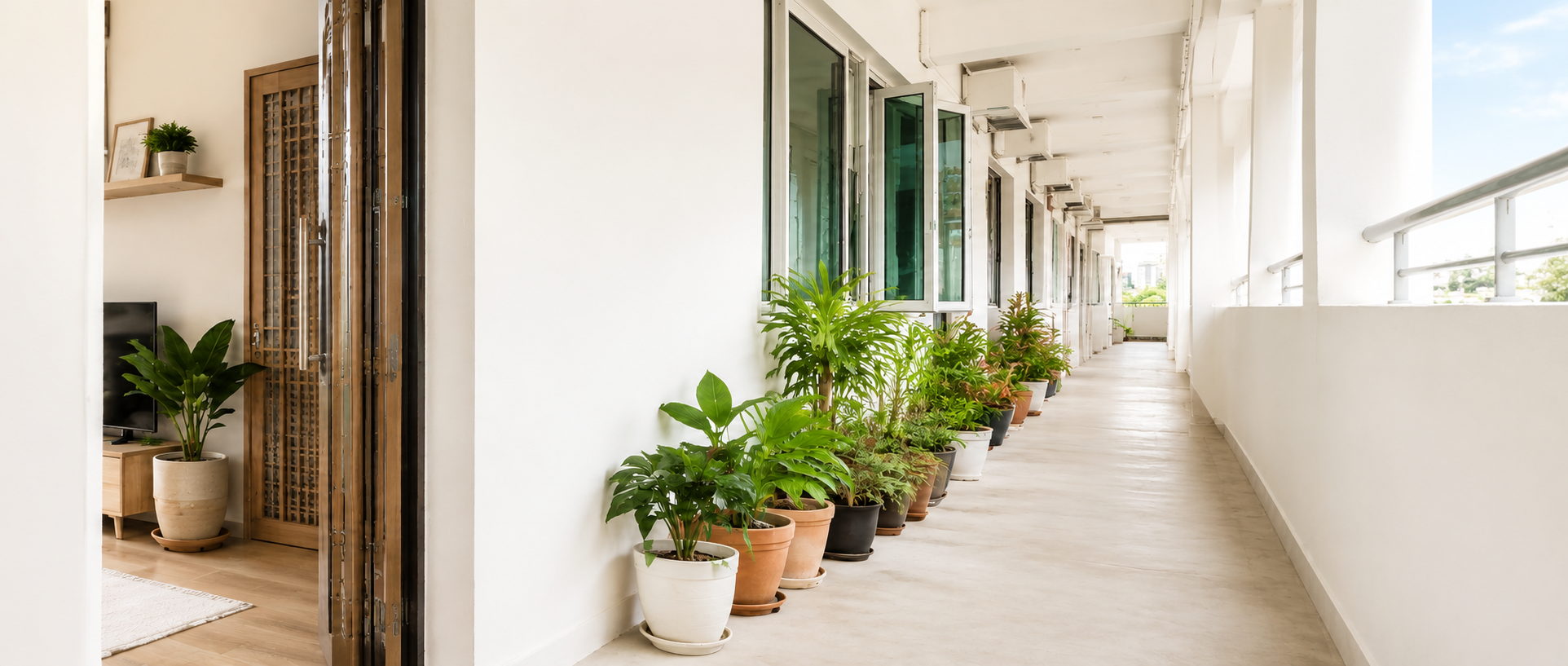
HDB corridors require more discipline. NParks’ corridor-gardening guidance states that a minimum 1.2m access clearance must remain unobstructed. SCDF similarly requires at least 1.2m of continuous clear escape passage when potted plants are permitted, while staircases and their immediate landings must remain completely free of objects.
NParks also recommends matching corridor plants to sunlight levels rather than planting by aesthetics alone.
And remember the very Singaporean enemy of every forgotten plant tray: standing water. Check trays and containers regularly to reduce mosquito-breeding opportunities.
A greener home does not require turning every shelf into rainforest territory.
Better approaches include:
The strongest result usually comes from using plants to frame a room, not filling every available corner.
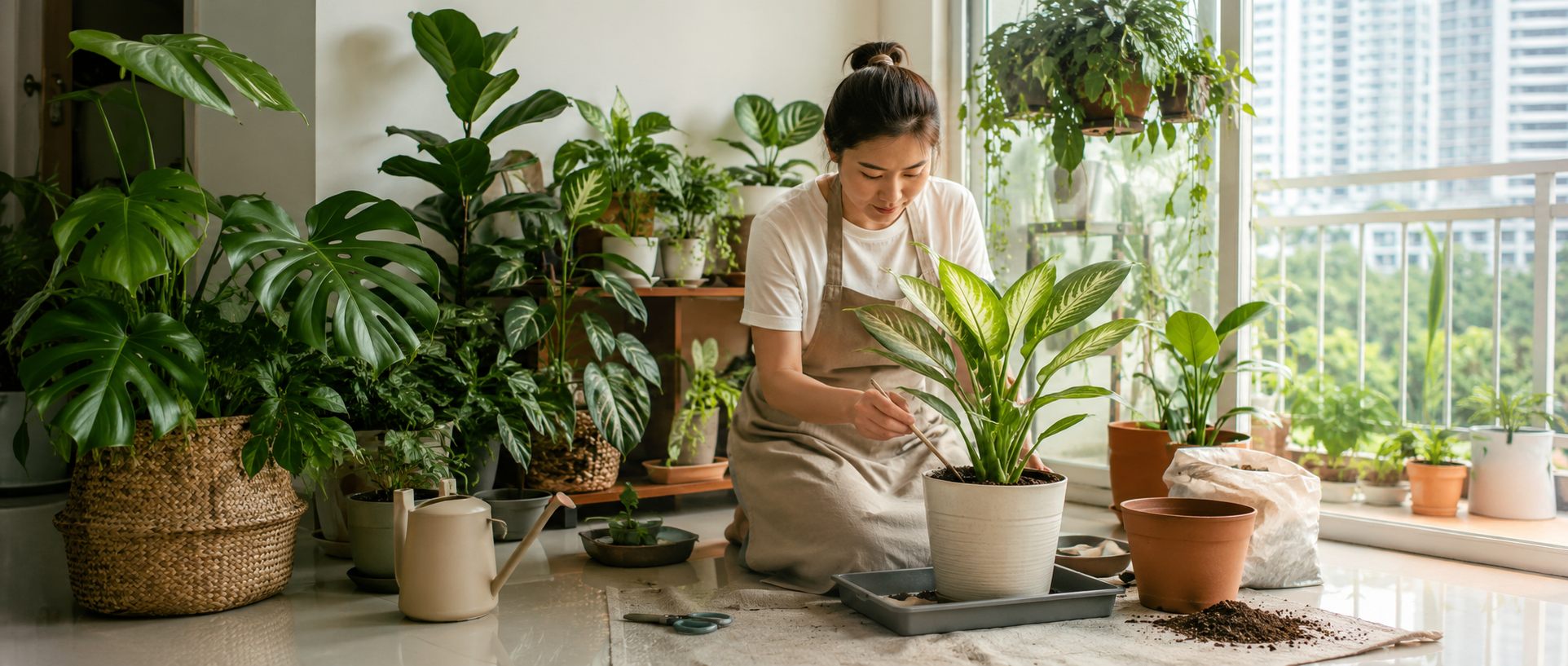
Singapore’s humidity helps tropical plants, but overwatering remains one of the easiest ways to kill them.
A practical routine:
For substantial trees on private property, pruning is increasingly professionalised. Singapore introduced SS 724, its first national tree-pruning standard, in 2026, covering trees on both public and private land.
See an attractive cutting or fruit outside? Leave it where it is.
The public is not permitted to harvest plants or fruit from state land managed by NParks or the Singapore Land Authority, including naturally fallen fruit.
Singapore’s public landscaping may look abundant, but it is not a complimentary propagation aisle.
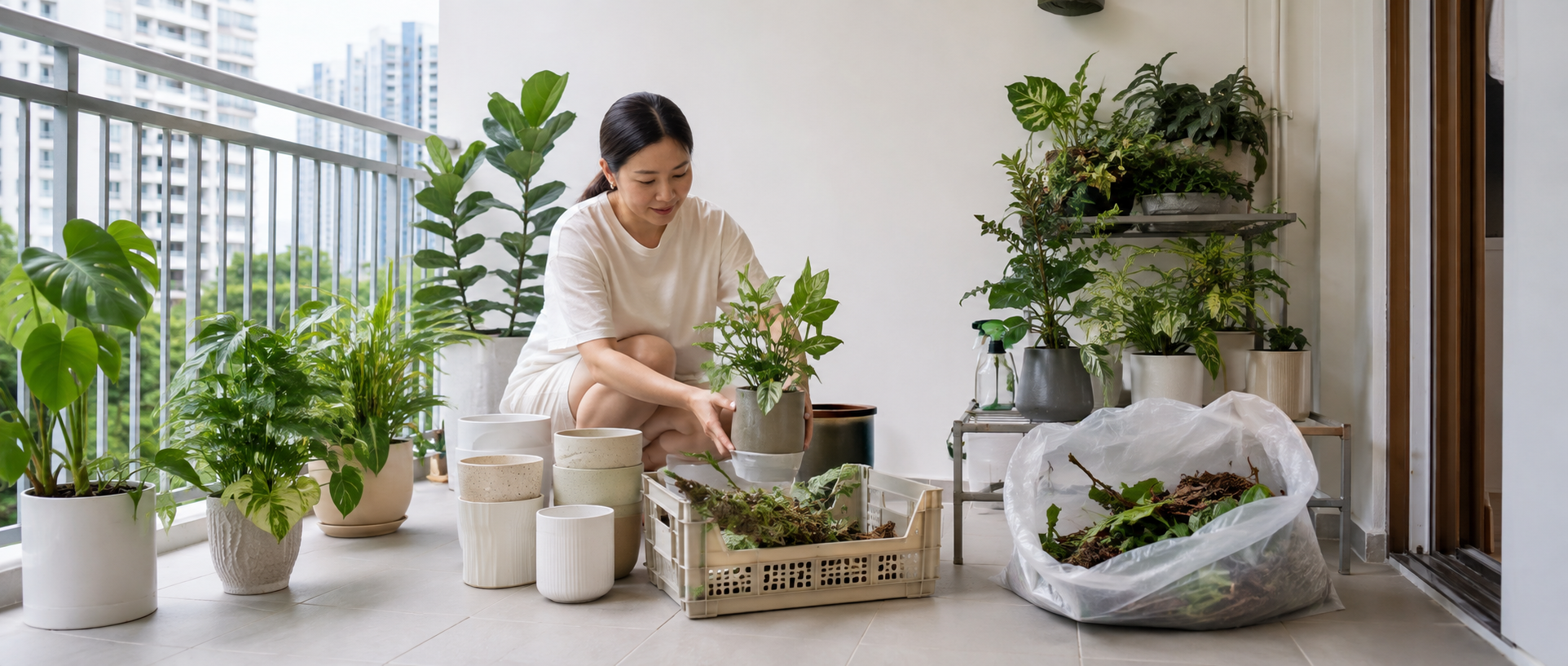
Healthy plants can be gifted, swapped or passed to neighbours. Pots can usually be cleaned and reused. Diseased plants should be separated from healthy ones to avoid spreading pests or fungi.
For bulky planters, large woody plants or substantial amounts of soil, follow your estate’s disposal arrangements rather than leaving them in corridors or common areas.
The underlying lesson mirrors Singapore’s wider greening story: good greenery is managed greenery.
Choose the right species, place it intelligently, maintain it properly and your HDB or condo can carry a small piece of the Garden City indoors.
From price insights to viewings and offers, Kucing helps owners, agents, buyers, and tenants move through property decisions with more clarity and control.