Single Women in Singapore Are Changing the Property Market Fast
Single women in Singapore are buying and renting homes on their own with more confidence. Explore the latest data, key market shifts, and smarter property moves for 2026 today.

Single women in Singapore are buying and renting homes on their own with more confidence. Explore the latest data, key market shifts, and smarter property moves for 2026 today.

Singapore’s housing story is no longer just about couples, family planning, or the traditional upgrade path. A more independent buyer and renter profile is gaining ground, and single women are a major part of that shift. As International Women’s Day approaches on 8 March 2026, the timing is right to look at what the data is really saying and what it means on the ground for women searching for a place of their own in Singapore. 
Singapore households are changing. The share of one-person resident households rose from 11.2% in 2014 to 16.1% in 2024, according to SingStat’s Population Trends 2025. HDB’s Sample Household Survey also found that the share of one-person HDB households reached 15.6% in 2023/2024, more than double the level seen two decades ago. This is not a niche lifestyle trend anymore. It is a structural change in how people live. 
At the same time, women in Singapore have become even more economically active. The female share of the resident labour force rose from 45.5% in 2015 to 47.7% in 2025, while the labour force participation rate for women aged 25 to 64 climbed from 74.1% to 80.5% over the same period. More financial independence tends to create more housing independence too. 
For singles, the strongest signal is preference. HDB’s 2023/24 Sample Household Survey found that single occupiers who intended to move preferred to buy their own housing unit rather than rent or share. That tells us something important: in Singapore, solo living is not only about flexibility. It is often about ownership, control, and building long-term stability. 
The market backdrop also matters. URA reported that private residential prices rose 3.3% in 2025, while the private residential rental index increased 1.9% for the full year and then fell 0.5% quarter on quarter in Q4 2025, the first decline since Q2 2024. For women comparing “buy now” versus “rent first,” that means the answer is no longer obvious. Ownership is still expensive, but the rental market has stopped running away as fast as before. 
For many single women in Singapore, buying is about more than a roof. It is about autonomy. It means choosing the location, controlling monthly housing costs over time, and building equity instead of paying rent indefinitely. The appeal becomes even clearer when public policy supports singles: HDB’s Singles Grant offers S$40,000 for eligible first-time single Singapore Citizens buying a resale flat, while the Enhanced CPF Housing Grant for Singles remains available for eligible buyers as well. 
There is also a practical angle. A buyer today can compare nearby transactions, spot pricing gaps, and avoid emotional overpaying. That matters even more in a market where headline stories and agent talk can distort perception. When single women buy with data instead of pressure, they often make better trade-offs on location, size, and timing.
Buying is not always the smartest first move. Renting can be the better option for women who want speed, flexibility, or proximity to work before committing to a long-term mortgage. That is especially true for younger professionals, women testing a new district, or renters waiting to cross major life or eligibility milestones. 
The rental picture has also become slightly more manageable. HDB said approved applications to rent out flats rose 7.5% in 2025 to 39,408 cases, while policymakers extended the temporary relaxation of occupancy caps for larger HDB flats and private homes until the end of 2028. More rental stock and softer late-2025 private rental movement may not make Singapore cheap, but they do improve room for negotiation and choice. 
The smartest move is rarely “buy” or “rent” in the abstract. The real question is whether the unit, location, and price fit your next three to five years.
A practical shortlist often looks like this:
The rise of single women buyers and renters is not a side note. It is part of a wider shift toward smaller households, more individual decision-making, and more demand for tools that simplify independent housing choices. In plain terms, Singapore’s property market now needs to serve people who are moving on their own, deciding on their own, and comparing homes on their own terms. 
That is why data visibility matters more than ever. The market rewards clarity. It punishes guesswork.
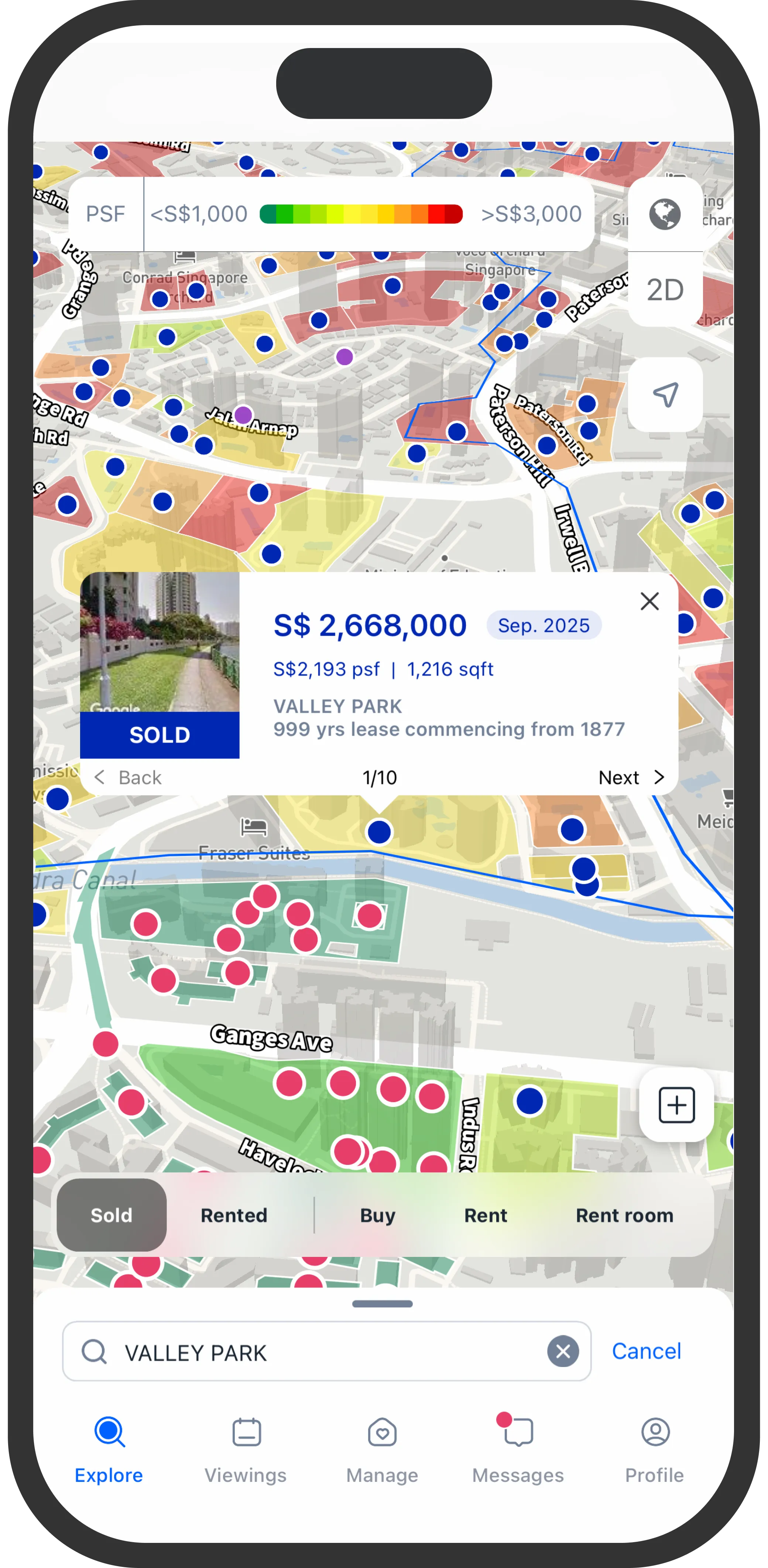
Kucing is built for exactly this kind of modern property journey. In one Unified PropSpace, women can compare listings, visualise market data, track favourites, manage chats, and organise viewings without juggling five different tools. That matters when you are making a serious housing decision solo and want control, speed, and a clearer read on value.
This International Women’s Day, the real story is not just that more women are entering the market. It is that more women are entering it prepared. And that changes everything.
From price insights to viewings and offers, Kucing helps owners, agents, buyers, and tenants move through property decisions with more clarity and control.

.png)